· Mark Lester Mahilum · Resources · 6 min read
The Best CRM for MedSpas in 2026: 5 Options Compared
Compare the best CRM for medspas in 2026 and pick the platform that fits your clinic size, patient volume, and budget.
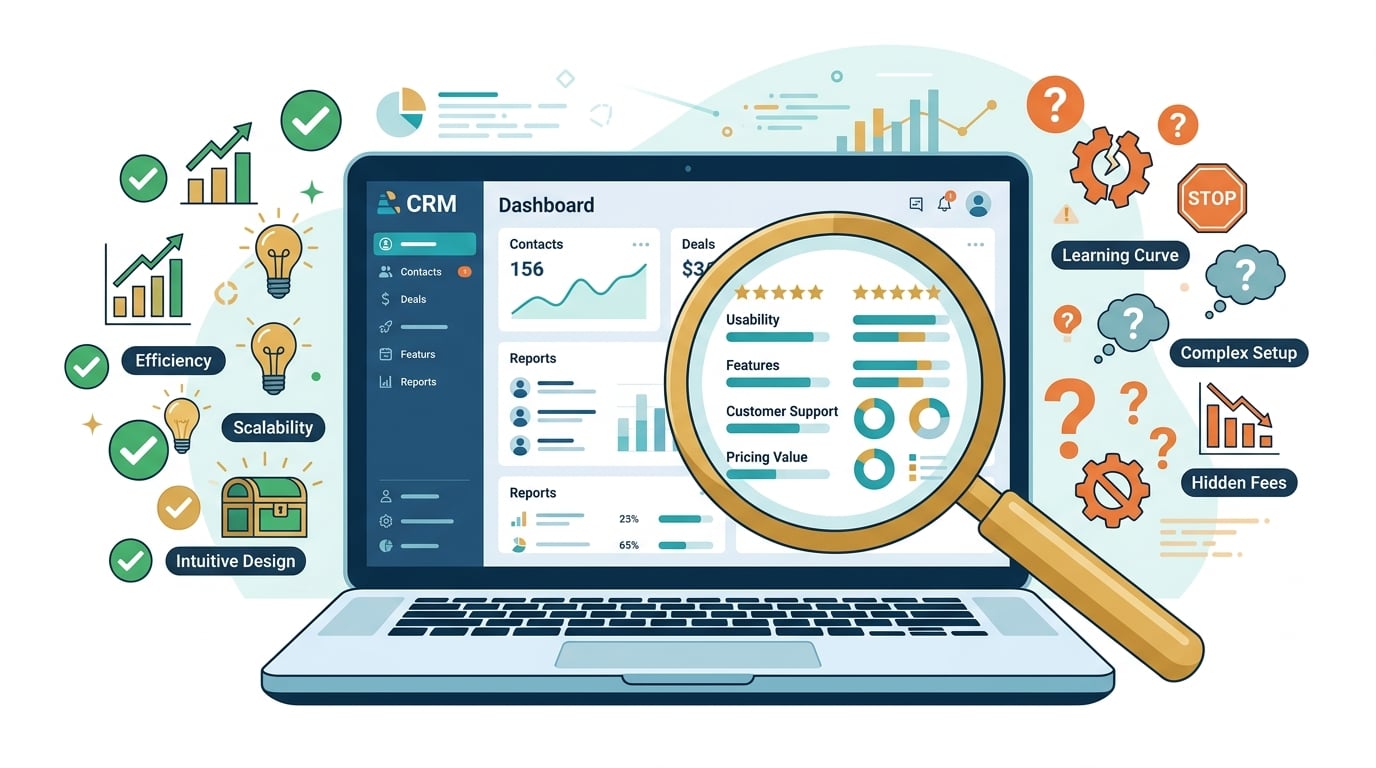
The wrong CRM choice costs you months. You set it up, migrate your patient contacts, train your front desk on the interface, customize it for your workflow — and then realize it does not actually do what your clinic needs it to do. Then you start over.
This guide is designed to prevent that.
Here are five CRM and practice-management options medspas actually use, what each one is genuinely good at, and who should use which — based on your clinic’s size and patient volume.
1. Boulevard — Best All-in-One for Solo and Small MedSpas
Boulevard was built for appointment-based businesses — medspas, salons, and wellness studios — and it shows. The interface is clean, the learning curve is manageable, and it combines booking, point-of-sale, and client management in one platform.
What it does well:
- Patient booking and calendar management with online self-scheduling
- Point-of-sale and payment processing built for treatment-based businesses
- Membership and package tracking
- Automated appointment reminders and basic follow-up messaging
- Reporting built around appointment-based revenue, not generic sales pipelines
The limitation: Boulevard’s marketing automation is basic compared to a dedicated marketing platform. You can automate simple reminders, but complex lead-nurture logic (if/then branching, multi-channel campaigns) typically requires adding a tool like Zapier or Make.
Best for: Solo medspas and small clinics that want booking, POS, and basic patient communication in one place without complexity.
2. Mangomint — Best for MedSpas Who Want More Control
Mangomint is a practice-management competitor with a similar core — scheduling, POS, client records, automated messaging — but it gives clinics more flexibility over staff permissions, service menus, and appointment rules.
What it does well:
- Detailed staff scheduling and commission tracking
- More flexible service-menu and add-on configuration than many competitors
- Built-in two-way texting for patient communication
- Reporting on rebooking rates and no-show trends
The limitation: Like most practice-management tools, Mangomint is built for day-to-day clinic operations rather than deep marketing automation. Clinics that want AI lead qualification or complex nurture sequences still need to connect it to an automation engine.
Best for: Clinics that want more control over staff and service configuration than a simpler booking tool provides, and are willing to invest setup time to get it right.
3. GoHighLevel — Best for MedSpas at Scale or Multi-Location Groups
GoHighLevel (GHL) is not a practice-management tool — it is a white-label CRM and marketing automation platform. It includes CRM, email marketing, SMS, funnel builder, calendar booking, website builder, and pipeline management in one dashboard.
For medspas running high consultation volume across one or more locations, this consolidation is genuinely valuable. For a single-provider clinic just getting started, it is overwhelming.
What it does well:
- Sophisticated pipeline automation with SMS, email, and voicemail drops for consultation follow-up
- Built-in appointment booking with reminder sequences
- Comprehensive lead tracking from first inquiry to booked consultation
- White-label option for consultants or groups managing marketing across multiple medspa locations
- Connects cleanly with n8n for advanced automation workflows
The limitation: GHL has a steep learning curve and an interface that feels designed for agencies, not a single front desk. Most clinics use a fraction of what it offers — which means paying for capacity that sits unused.
Pricing: $97/month (single location) or $297/month (agency).
Best for: Medspas with high lead volume, multi-location groups, or clinics building a marketing operation on top of patient acquisition. I build the AI-Powered Growth package on it. For a full honest review of what GHL delivers — and who should skip it — see the detailed breakdown here.
4. Clinical Charting Software (Aesthetic Record, PatientNow)
Tools built specifically for aesthetic practices — such as Aesthetic Record and PatientNow — handle clinical charting, treatment photos, and consent forms. They are genuinely useful for the clinical side of running a medspa.
The limitation: They are weak as marketing CRMs and generally not built for lead nurture or booking-funnel automation. They solve the clinical documentation problem, not the patient-acquisition problem — a different challenge entirely. Because these tools may hold protected health information, choose options that will sign a Business Associate Agreement (BAA) before storing any patient health data in them.
Best for: Clinics that already have marketing and booking automated and want a dedicated charting platform. Not a replacement for a CRM.
5. Notion + CRM Template — Best for Flexibility at Low Cost
A well-built Notion database can function as a lightweight lead and contact tracker for a medspa in its early stages — inquiry tracking, deal stages, and consultation notes in one place. Notion should hold marketing and scheduling data only, never clinical or treatment records, since it is not a tool that offers a BAA.
What it does well:
- Free (or $8/month for the Pro plan)
- Infinitely customizable
- Can be connected to forms, calendars, and automation tools via Zapier
- Works well as a lightweight lead tracker while you validate your process
The limitation: Notion does not send SMS reminders, manage booking calendars, or trigger automation natively. You need Zapier or Make to connect it to everything else, which adds complexity.
Best for: New medspas that want to start organizing lead and inquiry data without committing to a paid CRM. A good stepping stone before graduating to Boulevard, Mangomint, or GoHighLevel.
Recommendations by Clinic Size
| Clinic Stage | Recommended CRM | Reason |
|---|---|---|
| Pre-launch / very new | Notion + Zapier | Low cost, builds good habits |
| Single location, growing | Boulevard | Booking, POS, and patient comms in one |
| Single location, complex menu | Mangomint | More control over staff and services |
| High volume / multi-location | GoHighLevel | Volume, SMS, full marketing automation |
| Group / franchise model | GoHighLevel | White-label, multi-location, full stack |
The Bottom Line
Do not overthink the CRM decision. A decent system used consistently beats a perfect system configured halfway.
If you are a new or single-location clinic without a CRM yet, start with Boulevard or Mangomint this week. If you are running high consultation volume and your current system is holding you back, a strategy call is a good place to map out a GoHighLevel migration.
Once your CRM is in place, the next piece is choosing the right automation engine to connect it to everything else — here is how Zapier, Make, and n8n compare. Or if you want to see how the full stack fits together, here is the complete tool breakdown.
And if you want the CRM fully configured, integrated with your booking calendar, SMS reminders, and payment processor, that is exactly what I build. See the automation packages or book a free strategy call.