· Mark Lester Mahilum · Tutorials · 7 min read
AI Email Sequences That Keep MedSpa Patients Booking
Use AI to draft patient email sequences that nurture leads, confirm bookings, and prompt rebooking — automated for good.
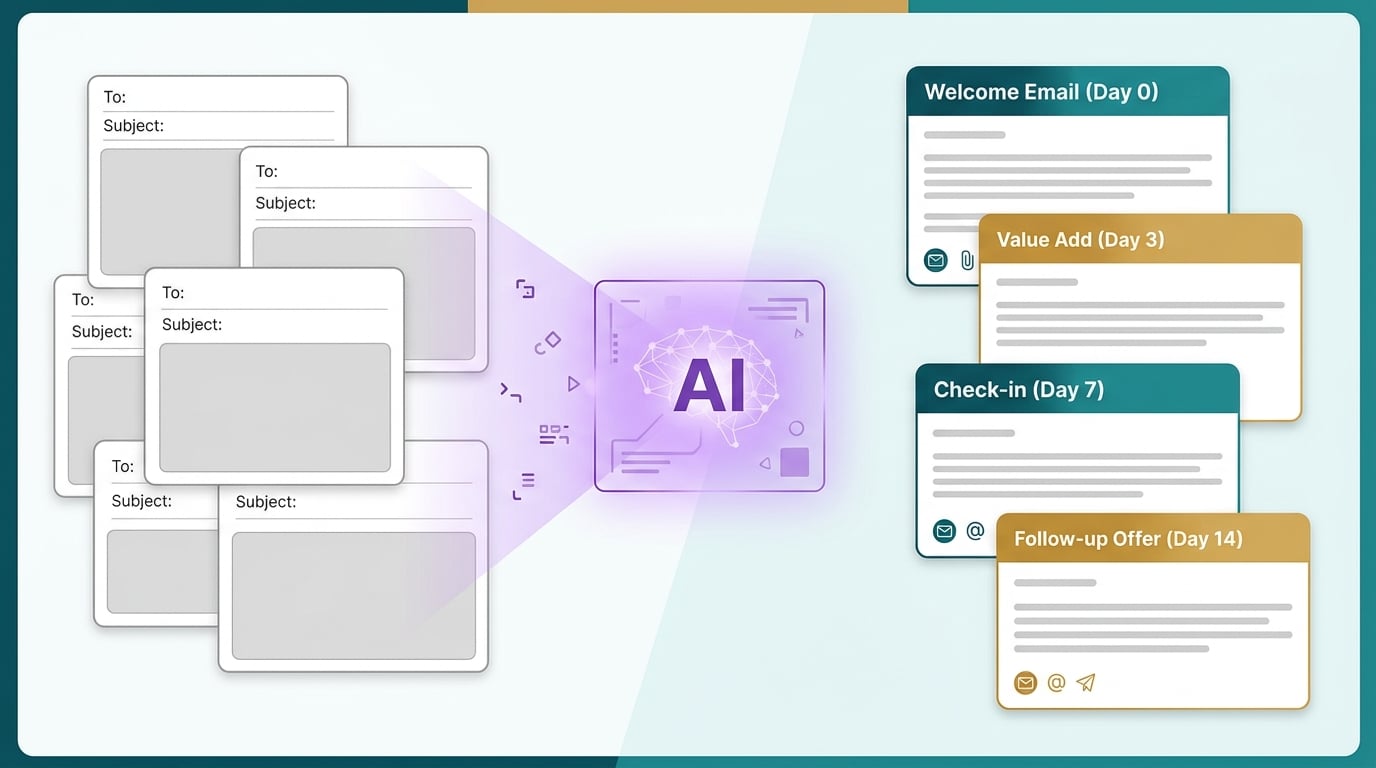
The bottleneck for most medspa owners who want to automate email marketing is not the automation tool. It is the words.
Setting up GoHighLevel takes an afternoon. Connecting it to your booking platform via Zapier takes another hour. But then you sit down to write five patient nurture emails and the cursor blinks at you for forty-five minutes.
AI fixes this. Not perfectly, not without your involvement — but it gets you from blank page to first draft in minutes. Here is how to use it correctly for medspa email marketing automation.
MedSpa Email Marketing Automation: The 5 Sequences You Need
Before touching an AI tool, know what you are actually building. These are the five sequences that every medspa should have automated:
1. Welcome Sequence (3 emails, triggered by opt-in) Introduces your clinic, delivers the lead magnet or promised value (a guide, a discount, a free consultation offer), and begins building trust. Does not pitch anything until Email 3.
2. Consultation Booking Sequence (3 emails, triggered by inquiry) Follows up with leads who inquired but have not booked a consultation yet. Delivers value, shows proof, makes a direct invitation. See the full follow-up breakdown here. For the complete automation of the consultation process itself — from ad click to confirmed appointment — see the end-to-end guide here.
3. Post-Treatment Follow-Up Sequence (3 emails, triggered by appointment completed) Checks in after the visit, answers common aftercare questions, and sets expectations for what happens next. Reduces confused messages to the front desk and builds trust before the next ask.
4. Rebooking and Membership Renewal Sequence (2 emails, triggered by days-since-last-visit or renewal date) Prompts patients to schedule their next appointment before they drift off the calendar, and reminds membership patients when renewal is coming up.
5. Review Request Sequence (2 emails, triggered by “Appointment Complete” tag) Asks for a review at the moment of peak satisfaction. The first email asks, the second is a friendly reminder three days later.
That is thirteen emails total. Most clinics write zero of them and then wonder why their automation is not generating bookings.
How to Prompt AI for MedSpa Emails That Do Not Sound Robotic
The quality of AI email output is determined entirely by the quality of your prompt. Vague prompts produce generic emails. Specific prompts produce emails that sound like your clinic.
Here are the four elements every AI email prompt needs:
1. Your voice: Paste 2–3 examples of emails or social posts you have written that you like. Say “match this writing style.”
2. Your ideal patient: Describe exactly who you are writing to. Not “medspa patients” — “women 30–55 interested in preventative aesthetic treatments, price-conscious but willing to invest in results they can see.”
3. The email’s job: What is this specific email supposed to make the reader feel or do? “This email should make them feel confident booking a consultation, and leave them curious enough to open the next email.”
4. Any constraints: Length, tone notes, things to avoid, a specific CTA.
An Example AI Prompt You Can Use Right Now
Here is a paste-ready prompt for your Welcome Sequence Email 1:
“Write Email 1 of a 3-email welcome sequence for a medspa. The lead just downloaded a free guide on choosing the right treatment package.
Writing style: conversational, direct, peer-to-peer. Not corporate. Short sentences. No filler phrases like ‘I hope this finds you well.’ Open with something that makes the reader feel seen — not a compliment.
Target reader: A woman 30–55 who is curious about aesthetic treatments but has never booked a consultation. She is comparing a few clinics online and wants to feel confident before she commits.
Job of this email: Deliver the guide download link, share one unexpected insight about what to expect at a first consultation, and end with a question that makes them want to reply.
Constraints: Under 200 words. No pitch. No CTA to book yet. End with a genuine question, not a placeholder.
Do not start with ‘I’ or ‘Hey.’ Do not use exclamation marks.”
This prompt will produce an email that is 80% of the way there. You will need to:
- Replace any AI hallucinations (fake statistics, wrong treatment names, wrong tool names)
- Add a specific patient story or example if the AI used a generic one
- Adjust any phrases that do not sound like your clinic
The edit takes ten minutes. The alternative (writing from scratch) takes two hours and often produces lower quality output because you are too close to your own business.
Tools to Write and Automate in One Flow
Writing: ChatGPT (GPT-4 or GPT-4o) or Claude (Sonnet or Opus) both produce strong email copy from good prompts. Claude tends to write in a more nuanced, less formulaic tone — worth testing both for your voice. For a broader look at how AI is changing medspas beyond email, see what is actually shifting in 2026.
Email delivery: GoHighLevel if you want email and SMS in one platform, or the native email features inside Boulevard or Mangomint if that is already your booking system.
Connecting everything: Zapier or Make to trigger sequences based on booking-platform events (appointment completed, new tag, form submission, days since last visit).
The flow:
- Write all emails using AI + your editing
- Load them into your email tool as a sequence
- Set the triggers in Zapier (appointment completed → start post-treatment sequence)
- Test with a real email address
- Go live
Once built, the sequences run permanently without ongoing maintenance — except when you want to improve a subject line based on open rate data. If patient data is involved anywhere in the flow, choose tools that will sign a Business Associate Agreement before connecting them.
Practical AI Tips for MedSpa Emails
Do not use AI for the whole sequence in one prompt. Prompt it one email at a time. The quality drops significantly when you ask for all five emails at once.
Give it your real patient language. If patients always describe their goal as “I just want to look like myself, only fresher,” use that phrase in your prompt. AI will work it into the copy naturally.
Tell it what not to do. “Do not use the word ‘journey.’ Do not mention specific treatment results. Do not open with a question.” These constraints improve output dramatically and keep you clear of medical-claim territory.
Use AI for subject lines separately. After writing the email body, run a second prompt: “Write 5 subject line options for this email. Vary the approach — curiosity, specificity, contrarian, question, statement.” Pick the one that sounds most like your clinic.
The Time Investment
Writing 13 emails from scratch typically takes clinic owners 8–15 hours spread over several days. With AI assistance and good prompts, the same 13 emails take 2–4 hours — including editing time.
More importantly, the quality floor is higher. AI does not produce writer’s block, does not write the same paragraph structure for every email, and does not need to warm up before producing its best work.
Getting the Full System Running
Writing the emails is half the work. The other half is connecting them to your automation triggers correctly — so the right email fires at the right moment, for the right patient, based on what they have done.
If you want both — the email copy and the automation infrastructure — done from scratch, that is what the Full Business Automation package includes. We write the sequences, build the triggers, test everything, and hand you a running system.
Book a free strategy call to talk through what your specific sequences should look like, or read the patient follow-up automation guide to dive deeper into the sequence strategy.