· Mark Lester Mahilum · Tutorials · 7 min read
Patient Follow-Ups That Rebook Without Feeling Robotic
Patient follow-up automation that converts instead of getting unsubscribes — the framework to build it right.
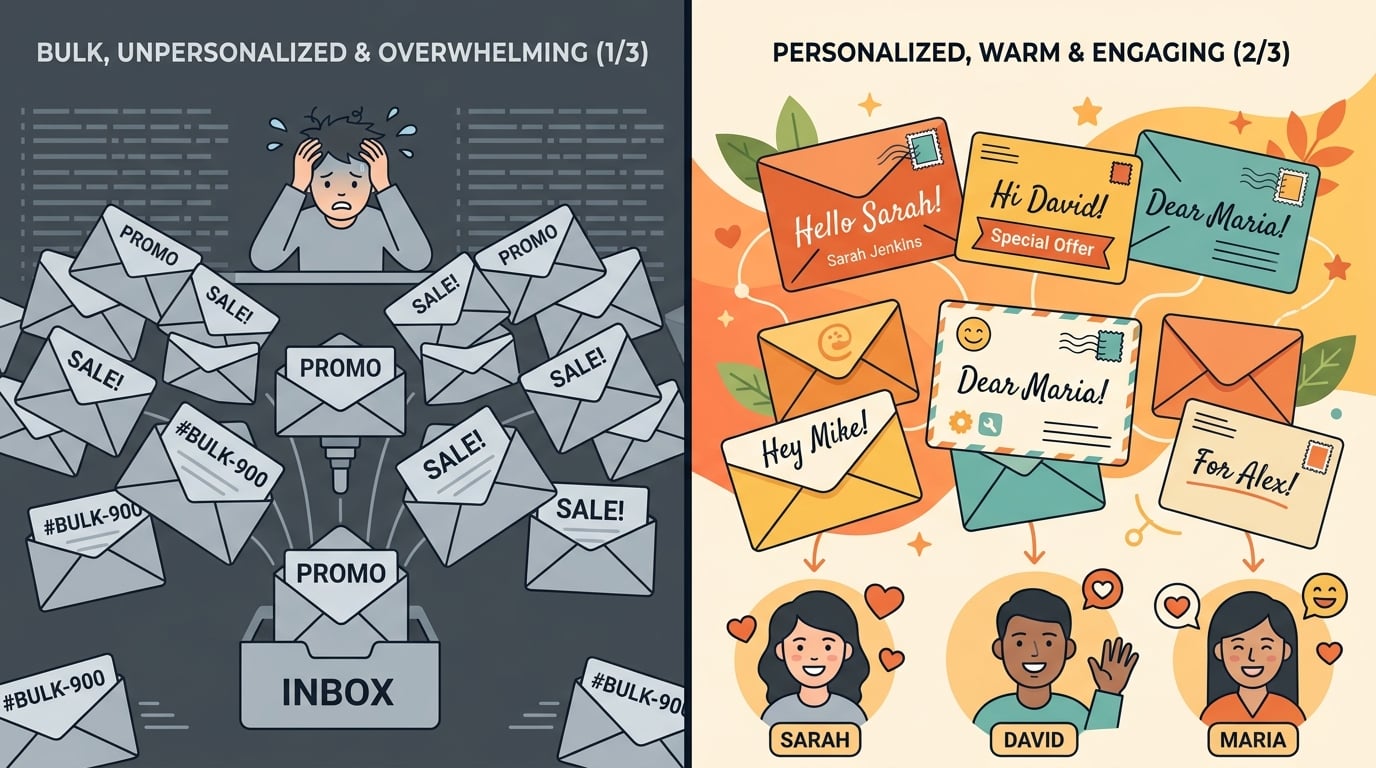
The most common reason medspa owners avoid automated follow-ups is a fear of sounding like a robot.
It is a reasonable fear. Most automated messages do sound like robots. “Just following up to see if you had a chance to review my previous message” is not a follow-up — it is a digital nudge that respects no one’s time.
But the problem is not automation. The problem is bad message writing applied to an automated system. The same badly written message sent manually would get the same response.
Here is how to build patient follow-up automation that actually converts — without making anyone feel like they are in a sales funnel.
Why Most Automated Follow-Ups Feel Spammy
Three patterns kill automated follow-up effectiveness:
They treat everyone the same. A lead who clicked an Instagram ad and a patient who is due for a rebooking are not the same audience. Sending them identical follow-ups ignores the context of where they are in the relationship — and patients can feel that.
They focus on selling instead of giving. “Are you ready to book?” sent three days after an initial inquiry is a pressure tactic, not a relationship. Prospects who are not yet ready to book do not become more ready when pushed — they unsubscribe.
They lack specificity. “We would love to see you again” is meaningless. “Your last visit was about 90 days ago — here is what typically comes next” is a conversation. Specificity requires personalization — which automation can actually help with if set up correctly.
The 3-Message Patient Follow-Up Automation That Actually Works
This is the framework I use for medspa follow-up sequences. It works for post-inquiry follow-up, post-treatment check-ins, and win-back campaigns for patients who have gone quiet.
Message 1 — Deliver Value (Send: Immediately or Day 1)
Do not sell in the first follow-up message. Give something useful instead.
If a lead inquired about your clinic, they have a question they are trying to answer. Message 1 should address that directly — a short insight, a quick guide, a relevant resource — without any pitch attached. If this is a post-treatment check-in instead, ask how they are feeling and offer a general aftercare tip rather than referencing the specific treatment by name.
Example subject line: “The thing most patients get wrong about aftercare”
What it contains: A 200-word observation about the most common question in their area of interest. No CTA to book anything. Maybe a link to a relevant blog post. End with: “Reply if this is helpful — we read every response.”
The goal of Message 1 is not conversion. It is trust. Prospects who see you give freely before asking for anything are far more receptive when the ask eventually comes.
Message 2 — Show Social Proof (Send: Day 3)
On Day 3, send a brief patient result story, kept general and never identifying. Not a testimonial quote — a narrative. One paragraph about a patient who had the same question your prospect has, and what she chose after her consultation.
Example subject line: “What most first-time patients ask us before booking”
What it contains: The before state (what she was unsure about), the specific choice she made, and the after state (how she describes the experience now, in general terms). 150–200 words. No pitch. End with a single soft question: “Does this sound familiar?”
This message does not ask anyone to book. It lets the story do the work.
Message 3 — Make the Direct Ask (Send: Day 7)
By Message 3, you have given value and shown proof. Now you can make a clear, confident invitation.
Example subject line: “Ready to come in for a consultation?”
What it contains: One paragraph acknowledging that you have been sharing some helpful information, one paragraph on what the next step looks like (a consultation, what happens on it, what they will walk away with), and a clear booking link.
No urgency tactics. No “last chance” language. Just a direct invitation with a clear description of what they get. For the complete system around the consultation itself — booking page setup, reminders, and post-visit branching — see the full process here.
Rebooking Cadence: The Follow-Up Medspas Miss Most
Post-inquiry follow-up gets most of the attention, but rebooking follow-up is where recurring revenue actually lives. Many treatments run on a predictable cadence — neurotoxin patients, for example, typically rebook roughly every 90 days as results wear off.
Set an automated reminder to fire a week or two before that window closes, rather than waiting for the patient to remember on their own. A simple three-touch cadence works well:
- First touch (roughly 75 days after last visit): A friendly heads-up that it may be time to think about scheduling
- Second touch (roughly 85 days): A direct booking link with available times
- Third touch (100+ days, no response): A win-back message acknowledging it has been a while, with a low-pressure invitation to come back in
This cadence applies to any treatment with a known return window — adjust the day counts to match the service instead of copying neurotoxin timing for everything.
How to Personalize Without Doing It Manually
The power of modern automation is behavioral segmentation — the ability to send different messages based on what a lead or patient has already done.
In GoHighLevel, or the native marketing tools inside Boulevard or Mangomint, you can:
- Tag by source: Lead from an ad gets a different Message 1 than a lead from a contact form
- Branch by behavior: If they click the link in Message 1, skip Message 2 and send a booking invitation instead. If they do not click, continue the sequence.
- Use first name tokens: A merge field like
{{ contact.first_name }}in the subject line is the single highest-impact personalization available — use it in every message
The key is that the segmentation logic is built once and runs automatically. You are not manually checking who clicked what or who is due for a visit. The system handles it.
Tools to Build This
For message sequences: GoHighLevel for email and SMS in one platform, or the native marketing features inside Boulevard or Mangomint if that is already your booking system.
For connecting to your contact form: Zapier or Make. When someone submits your contact form, they are added to your system and tagged to the correct sequence — automatically.
For behavioral branching: GoHighLevel handles conditional logic well at most price points. Boulevard and Mangomint handle basic if/then branching natively. If you want to use AI to write the message copy for these sequences, here is exactly how to prompt it effectively.
What to Avoid in Every Follow-Up Message
- Vague subject lines: “Just checking in” gets deleted. Be specific about what is inside.
- More than one CTA: One message, one action. Booking link or resource link — never both.
- Sending too frequently: Messages on Day 1, 3, and 7 is fine. Day 1, 2, 3, 4, 5 is a spam report.
- Apologizing for following up: “We know you are busy, but…” undermines your own message. Send without apology.
- Naming specific treatments in reminder texts: Keep SMS copy to “your upcoming appointment” — never the treatment name, for the patient’s privacy.
- Generic sign-offs: End each message with something specific — a question, an insight, or a direct invitation. “Best regards” followed by a booking link is a wasted opportunity.
Building the System
If you want this sequence running before the end of the week: set up a new sequence with three messages following the framework above in GoHighLevel, and connect it to your contact form via Zapier. It is a few hours of work.
If you want the whole system built correctly — with proper tagging, behavioral branching, rebooking cadences, and integration with your booking platform — that is what the Full Business Automation package includes. Book a strategy call and we will map it out in 30 minutes.
The difference between the clinics that rebook consistently and the ones that let patients fall through the cracks is almost always follow-up. Automate it, and you will never lose another patient to silence. For the bigger picture on how AI is transforming these systems across the industry, see what is actually changing in 2026.