· Mark Lester Mahilum · Tutorials · 6 min read
How to Build a MedSpa That Runs Without You
Build a medspa that runs without you — automated booking, reminders, follow-up, and review requests, done for you.

When medspa owners say they want a clinic that “runs without them,” they usually mean something specific: they want to stop being the bottleneck in their own business.
Not disappear. Not stop treating patients. Not hand the clinic over to a robot.
They want to stop being the reason a lead does not get followed up, a consent form does not get sent, a new patient waits three days for their intake materials, or a past patient does not hear from the clinic for months.
That is a solvable problem. Here is exactly what needs to be built.
The Four Systems Every Self-Running MedSpa Needs
System 1 — Lead Capture and Automatic Follow-Up
Moment someone expresses interest in a treatment, the clinic should respond faster than a human could — and more consistently than a human would.
This means:
- A contact form or opt-in that adds leads to the CRM automatically
- An immediate email or SMS acknowledging their inquiry
- A 3-message follow-up sequence that delivers value over 7 days
- Behavioral triggers that escalate follow-up if they open messages but do not book
With this system, a lead who fills out the contact form at 2 AM gets a personalized response in under 60 seconds. Without it, they wait until front desk checks messages in the morning — and some percentage of them have already booked elsewhere.
System 2 — Booking and Patient Onboarding Automation
The consultation-to-onboarding pipeline is where the most manual work tends to live — and where automation delivers the most immediate time savings.
A complete system covers:
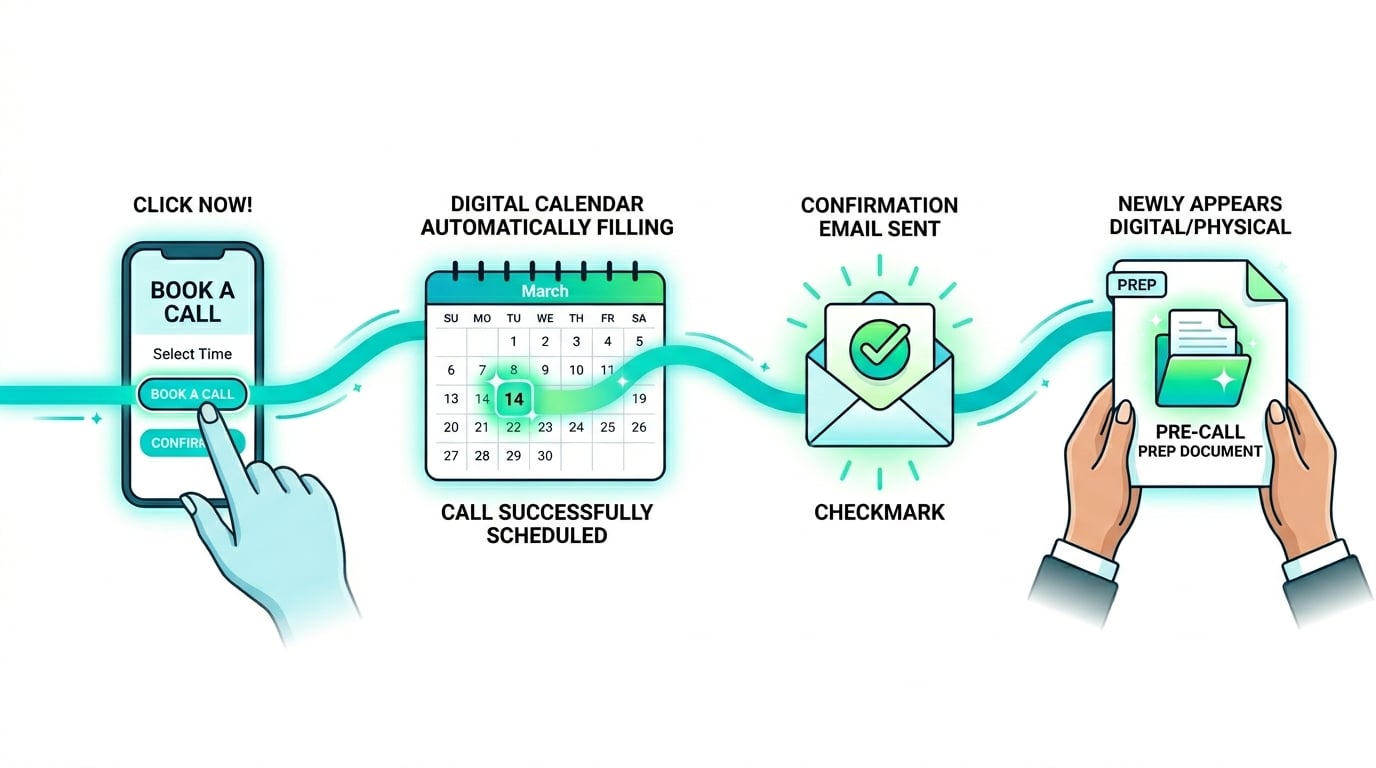
- Automated booking with intake questions, reminders, and pre-appointment prep messages
- Post-consultation follow-up sequence (different paths for “yes,” “thinking about it,” and “not right now”)
- New patient welcome message sequence triggered by booking
- Consent and questionnaire delivery, tracking, and CRM update on completion
- Patient portal access granted automatically
When this system is running, a new patient can book on a Saturday night and wake up Sunday morning with their portal set up, consent signed, intake questionnaire submitted, and first appointment confirmed — without front desk doing a single thing.
System 3 — Patient Delivery and Experience Automation
Systems in the first two phases are about acquisition. This one is about retention — keeping existing patients engaged, on track, and satisfied with results.
This includes:
- Appointment reminders with prep instructions sent 24 hours before each visit
- Post-treatment care instructions triggered by appointment completion
- Rebooking prompts inviting patients back on the right cadence for their treatment plan
- Milestone recognition when patients complete a treatment package (tagged manually by front desk, triggered automatically)
- Mid-treatment check-in surveys to catch any dissatisfaction before it becomes a lost patient
Patients notice the difference between visits. The treatment is the same, but the support around it arrives on time, every time.
System 4 — Offboarding and Referral Automation
The end of a treatment package is the moment of highest patient satisfaction — and the moment most clinics drop the ball.
A complete offboarding system handles:
- Completion message with a summary of results (business outcomes only, no medical claims)
- Review request at the moment of peak satisfaction (not three months later when someone remembers to ask)
- Referral invitation — “If you know anyone who could use this, we would love an introduction”
- Re-engagement sequence that re-surfaces past patients when the clinic launches new offers
- Annual check-in to maintain the relationship long after the package ends
Referral and re-engagement automations are often where a system earns back its cost, because they bring revenue from patients you already have. How fast depends on your database size and your offer.
What You Still Do When Systems Are Running
Worth addressing directly, because some medspa owners worry automation removes the human element from the clinic.
It does not. It removes the administrative element.
When these four systems are running, front desk and owner still:
- Deliver every treatment (no robot can do this)
- Create new offers and treatment packages (AI can assist, not replace)
- Make strategic decisions about pricing, positioning, and growth
- Build relationships and generate referrals
- Show up for the appointments that matter
What stops: manually following up with every lead, sending individual welcome messages, typing out the same intake instructions for the fifteenth time, forgetting to ask for reviews, and losing leads because someone got busy.
A Week in a Fully Automated MedSpa
Here is what happens in the background during a normal week when the systems are running:
Monday: A lead from last Thursday who did not respond to the first follow-up receives message 2 in their nurture sequence — a patient success story. They click the link to the booking page.
Tuesday: That lead books a consultation. They immediately receive a confirmation message, intake form, and pre-visit prep guide — all automatic.
Wednesday: Two active patients receive their appointment reminder with prep instructions. One replies with a question. Front desk responds personally in 3 minutes.
Thursday: A patient who finished a treatment package last week receives the review request message. She submits a glowing review nobody had to ask for awkwardly.
Friday: A past patient from eight months ago receives the re-engagement message about a new membership offer. She replies asking about enrollment.
None of this required anyone to remember, initiate, or spend time on. The system ran while the clinic focused on patients.
How Long Does It Take to Get There?
Month 1: Core automations running — booking, onboarding, basic follow-up. This is usually where a clinic reclaims its first few hours each week.
Month 3: Full system live — all four phases automated, sequences refined based on performance. Savings compound as the sequences get tuned, though how much depends on your patient volume and how manual things were to begin with.
Month 6: System matured — behavioral data is improving conversion, the referral sequence is generating warm leads, and admin has genuinely stopped eating the week.
Fastest path to Month 6 is getting the system built correctly in Month 1. Every month spent building it piecemeal is a month of continued manual work. Before committing, the ROI calculation for onboarding automation alone shows what the time savings actually return in dollar terms.
Where to Start
Starting from zero, build in this order:
- Consultation booking with automated reminders (Calendly — one afternoon)
- Lead follow-up sequence (GoHighLevel — one weekend)
- New patient onboarding automation (full guide here)
Want all four systems running from the start — built, tested, and documented in 2–3 weeks? That is exactly what the Full Business Automation package delivers.
Book a free strategy call to see what your clinic specifically needs and how quickly it can be running.
The medspa that runs without you is not a fantasy. It is an engineering problem with a known solution.